Aera Medical · St. George, Utah
IPL Photofacial in St. George, Utah
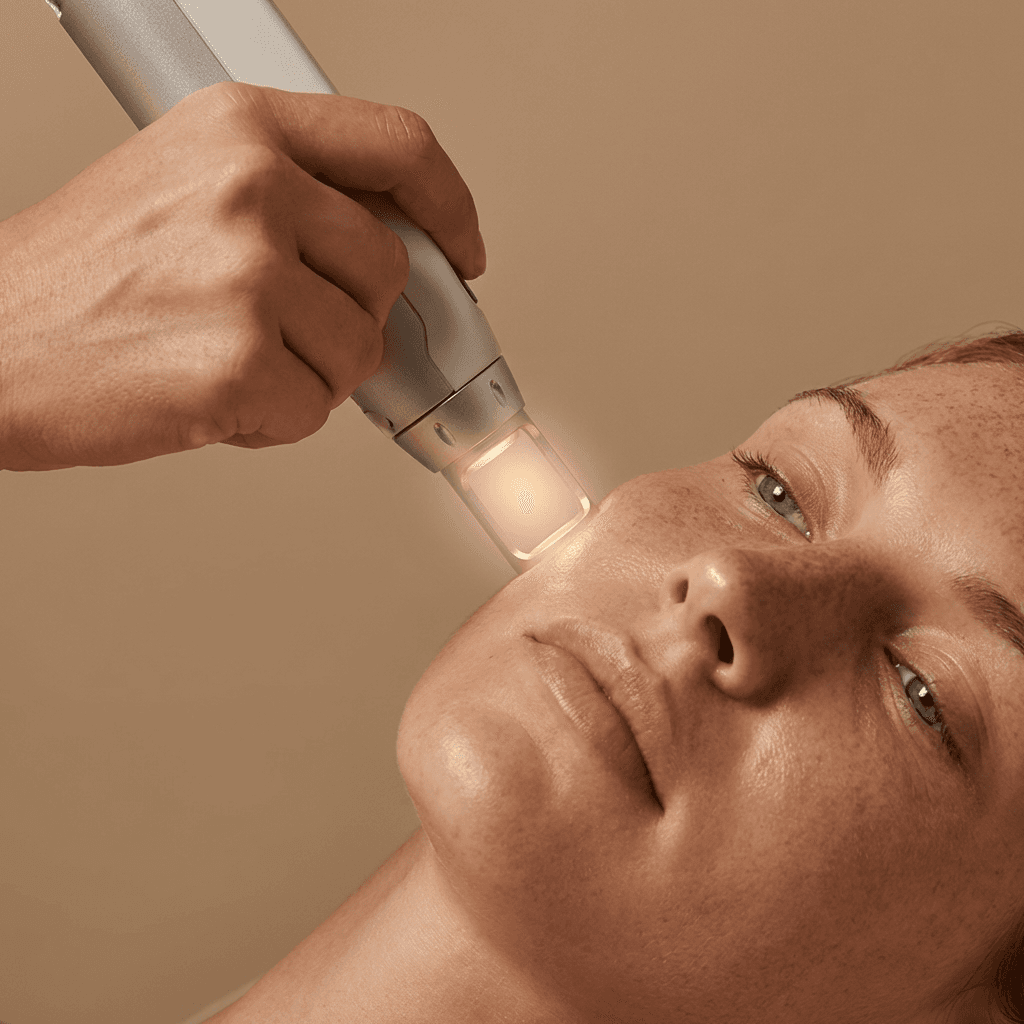
Dye-VL IPL on the Harmony XL Pro — treats sun damage, broken capillaries, redness, and rosacea in a single session. Performed by Janessa Kraupp-Sampson, MSN, FNP-BC, a board-certified Family Nurse Practitioner.
Board-certified provider
Personalized treatment plan
St. George, Utah
Clinical aesthetics · Southern Utah
Why Dye-VL Specifically
Most IPL platforms require switching applicators or running separate sessions to treat pigment and vascular concerns. Dye-VL combines two specifically-tuned wavelengths in one applicator — yellow light for vessels (broken capillaries, rosacea) and broad-spectrum for pigment (sun spots, age spots) — so a single pass addresses both at once.
For Southern Utah specifically, this matters. Years of high-altitude sun exposure produce a mix of pigmented and vascular damage. A patient with rosacea AND sun spots needs both treated, and Dye-VL doesn't make you choose.
What Dye-VL Treats
Sun spots & age spots
The pigment darkens visibly within 24 hours, then flakes away over 5–7 days. Treated spots are essentially permanent.
Broken capillaries
Tiny visible blood vessels (telangiectasias) on the cheeks, nose, and chin. Often visible result after 1 session.
Persistent redness
Diffuse facial redness from genetics or sun damage. Typically improves over 2–3 sessions.
Rosacea
Reduces flushing, redness, and visible vessels. Doesn't cure rosacea but durably calms its appearance.
Post-inflammatory hyperpigmentation
Brown marks left after acne or inflammation. Particularly responsive in lighter skin tones.
Uneven skin tone
Gradual brightening and evening of overall complexion across a series.
What to Expect
- Consultation — Janessa assesses skin type (Fitzpatrick), confirms IPL is the right tool, and reviews any sun exposure or product use that would delay treatment.
- Pre-treatment — Two weeks of strict sun avoidance, no self-tanner, no retinoids 3–5 days prior. Arrive with clean skin.
- Treatment — Protective eyewear is provided. The handpiece glides across the area, delivering pulses described as warm rubber-band snaps. 20–40 minutes for a full face.
- Same day — Brown spots will start to look darker within hours. Mild redness fades within 30–60 minutes. SPF 30+ before leaving.
- Days 1–7 — Brown spots flake off naturally. Don't pick. Continue strict SPF and gentle skincare.
- 4 weeks later — Next session if you're doing a series. Most patients see significant improvement after the second session.
Provider
Janessa Kraupp-Sampson, MSN, FNP-BC
Board-certified Family Nurse Practitioner with a Master of Science in Nursing. Clinical foundation in dermatologic conditions before aesthetic medicine. Trains other nurses through a 90-day injector program.
See the full Harmony XL Pro platform →Good to know
Frequently Asked Questions
IPL (Intense Pulsed Light) photofacial uses broad-spectrum light to target pigmented and vascular concerns simultaneously. At Aera Medical Aesthetics in St. George, we use Alma's Dye-VL on the Harmony XL Pro — a dual-wavelength IPL system that addresses both brown spots (pigmented lesions) and broken capillaries / rosacea (vascular lesions) in the same session. Most older IPL platforms require separate applicators or sessions for each.
At Aera, single Dye-VL IPL photofacial sessions run $350–$500 per session. Most patients need 3–5 sessions spaced 4 weeks apart for full results. Multi-session packages are discounted. Final price depends on the area treated (face only vs face + neck + chest).
IPL needs to be used carefully on Fitzpatrick IV–VI skin. Higher melanin in darker skin can absorb IPL energy and cause hyperpigmentation if settings aren't right. Janessa adjusts wavelength and energy based on Fitzpatrick type. For very dark skin tones, we may recommend a different modality (Q-Switched Nd:YAG for pigment, ClearLift for general rejuvenation) instead of IPL.
Treated brown spots are essentially permanent — the pigment is destroyed and flakes away. New sun damage can appear over time if SPF isn't worn. Vascular lesions (broken capillaries, rosacea redness) are also durably treated, though new vessels can develop. Most patients do an annual maintenance session to address new sun damage and prevent rosacea progression.
Most patients describe IPL as a series of warm rubber-band snaps — uncomfortable but tolerable. No numbing is typically required. Sessions take 20–40 minutes for a full face. The skin feels warm for 30–60 minutes after. Brown spots will darken visibly within 24 hours and flake off over 5–7 days.
Minimal. Mild redness for a few hours, possibly some swelling around treated brown spots. Most patients can resume normal activity (and apply makeup) the next morning. The visible 'side effect' is the brown spots darkening before they flake off — this is expected and resolves over 5–7 days. SPF 30+ is critical for at least 2 weeks.
IPL uses broad-spectrum light (multiple wavelengths in one pulse) and treats a wide area gently. Lasers use a single, focused wavelength and can deliver more aggressive results in a smaller area. For sun damage, broken capillaries, and rosacea, IPL is typically the right choice. For deeper wrinkles, scarring, or significant resurfacing, a laser like CO2, ClearLift, or Fraxel is more powerful. Many patients combine: IPL for tone/pigment, laser for texture/lines.
Sun spots and age spots, post-inflammatory hyperpigmentation (PIH), broken capillaries (telangiectasias), persistent facial redness, rosacea, mild melasma support (gentle settings only), and overall skin tone evenness. Especially valuable in Southern Utah where sun exposure is high.
Your next step
393 E Riverside Dr, Ste 103
St. George, Utah 84790
Start with a conversation, not a treatment plan.
Schedule a complimentary consultation with Aera’s licensed clinical team. We’ll talk through your goals, timing, and the options that make sense for you.
Your provider
Clinical judgment and aesthetic restraint, with a plan built around your anatomy rather than a template.
Ivey
Laser Specialist · Aesthetic Injector
Born and raised in St. George with a background in surgical nursing. Ivey brings a calm, detail-oriented approach to every laser treatment and injectable session.
Meet the Aera teamExplore more